
STACEY LYNN LIFESTYLES AND BODYWORK
The Fascial Intelligence Method™ · Level One
Learn to Listen
Through Your Hands
Learn a way of working with fascia that begins with noticing sensation, understanding the response to touch, and involving your client in the process.
A self-led online course for manual therapists, bodyworkers and body-based practitioners. Level One introduces The Fascial Intelligence Method™ from the foundations, with video teaching, guided practices and opportunities to bring each idea into your work.
This approach may be entirely new to you, or it may give language to something you have begun to notice. You do not need previous fascia training or familiarity with the method. We begin with learning what to notice and build from there.
Explore Level One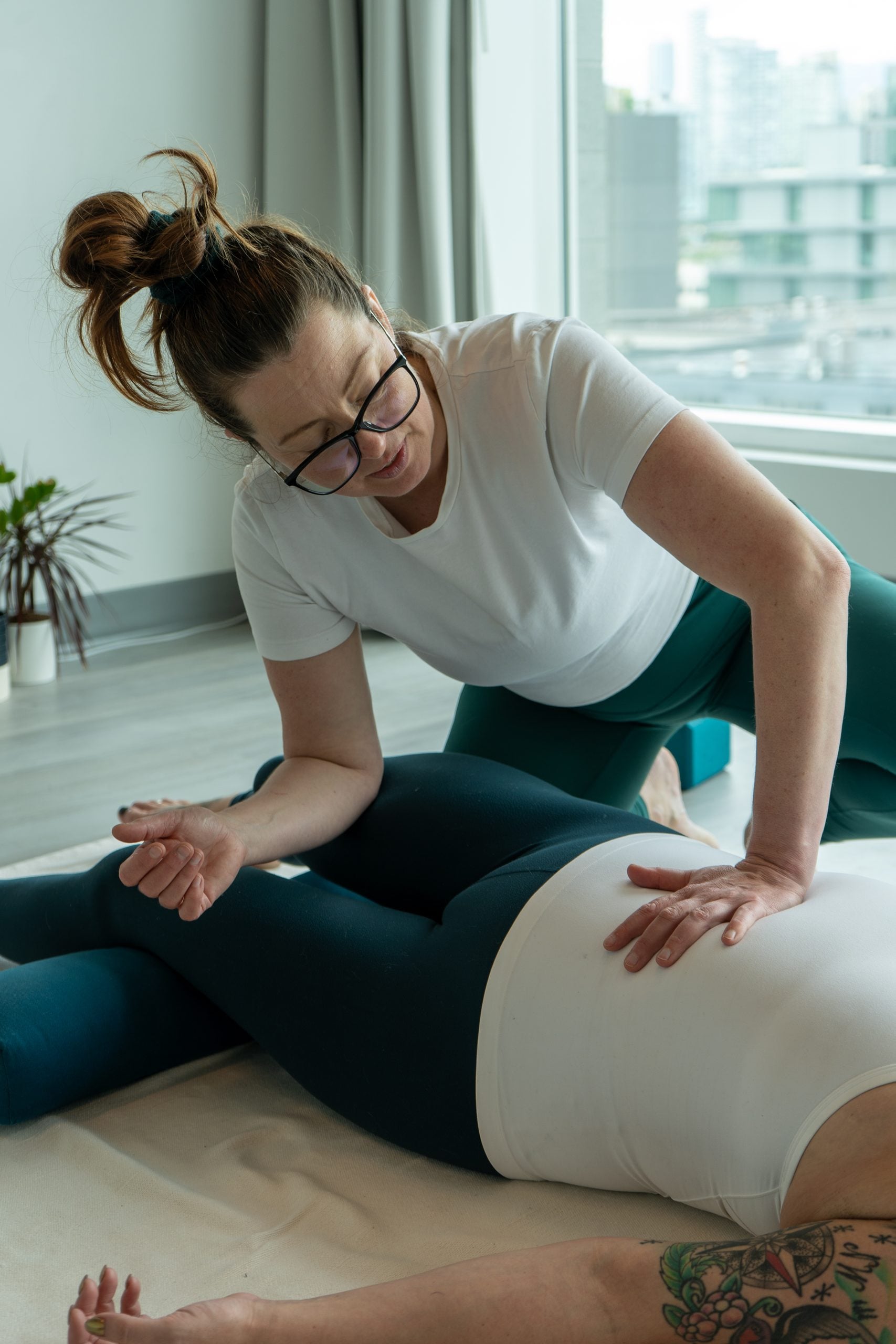
A Different Starting Point
Begin With
What the Body Communicates
The Fascial Intelligence Method™ introduces a way of approaching bodywork through sensation and relationship. Fascia—the connective tissue throughout the body—is central to that exploration.
You will learn to pay attention to qualities such as pressure, pull, stillness and warmth, alongside breath and the client’s description of what they feel. These observations become starting points for exploring how to offer and adjust touch.
Here, “listening through your hands” means learning to notice what happens during contact, ask questions and respond to what you and your client discover. Level One introduces that process step by step, with room to practise before moving on.
What You Will Learn
Build a New Way
of Paying Attention
What do you notice under your hands? What does your client feel? How might a change in pace, direction or body weight affect the experience?
These are questions we learn to explore throughout Level One. The course introduces a vocabulary, a listening sequence and practical ways to involve your client, then gives you opportunities to try them in your own body and hands-on practice.
You can bring your existing techniques with you. The learning is in how you notice, how you make sense of an experience, and how you choose your next step.
Learn What to Notice
Meet the method’s four sensory languages: pressure, pull, immobility and warmth. Learn to describe the qualities you feel before deciding what they mean.
Learn a Listening Sequence
Settle → Sense → Invite → Shift → Stay introduces how to arrive in contact, notice what is present, offer touch, adjust it and remain attentive to the response. Each part is taught and explored through practice.
Explore How to Adjust Touch
Discover ways to vary body weight, direction, pace and the size of a movement. Notice what these changes make easier to perceive for you and your client.
Explore Restriction and Resistance
Learn the method’s distinction between a limit in movement capacity and a protective response in the moment. Explore breath, tissue response and client feedback as you consider what to do next.
Learn to Guide Attention
Practise questions and language that invite clients to describe what they feel and notice what changes. Their observations become part of the conversation.
Include Yourself in the Learning
Explore how your own effort, expectations and attention shape touch. Guided practices help you experience the concepts in your own body as well as with a practice partner or client.
Inside Level One
Six Modules
Begin With the Foundations
The course introduces its concepts in sequence. You begin with noticing sensation in yourself, then build toward responsive touch, guiding client awareness and understanding your own role in the encounter. Each module includes teaching and opportunities to practise what you are learning.
Module 1
The Body as a Messenger
Begin by learning to notice sensation in your own body. Meet pressure, pull, immobility and warmth as the method’s four sensory languages, and practise describing an experience before interpreting it.
Module 2
Touch as Dialogue
Learn how compression, gliding and small movements can help you explore sensation with a client. Meet Settle → Sense → Invite → Shift → Stay, and practise each part of the listening sequence.
Module 3
The Nervous System and Safety
Introduce the relationship between nervous system activity, protective responses and the experience of touch. Explore how breath, pacing and the way sensation is interpreted matter within a session.
Module 4
The Practitioner’s Lens — Informed Neutrality & Guided Possibility
Learn what informed neutrality means within the method: bringing knowledge and attention while remaining open to what happens. Practise describing what you notice and offering options for the client to explore.
Module 5
Resistance, Restriction, and Relationship
Learn how the method approaches restriction and resistance differently. Explore the “edge of availability”—the point where further contact or movement is not readily received—and ways to respond through touch, breath and pacing.
Module 6
Orientation, Interpretation, & Embodied Guidance
Explore how the meanings, expectations and roles you bring into a session influence your choices. Learn ways to guide attention toward sensation and support client participation while staying open to uncertainty.
How You Learn
At Your Pace
In Your Practice
Level One is self-led and available without a scheduled cohort. Move through the six modules at a pace that gives you room to understand, explore and apply the work.
Return to material as your perception develops. A concept that makes sense on the page may become much clearer after you have noticed it in your own body or a client session.
The learning sequence is simple: explore the material, notice your experience, bring it into practice, and reflect on what changes.
Video Presentations
Watch the teaching presentations for each module, with space to pause, revisit concepts and bring what you notice into practice.
Six Companion Manuals (PDFs)
Six downloadable PDFs covering the core concepts and frameworks, with language you can return to as the work becomes more familiar.
Audio Companions
Another way to engage with each module and revisit the material away from the page.
Embodiment Practices & Integration Worksheets
Explore the concepts through your own awareness, track what you notice and connect the learning to your hands-on practice.
Integration Guide & Glossary
Support for bringing the modules together and finding your way through the method’s shared language.
Immediate & Lifetime Access
Your course access begins immediately after payment. Return to the materials in the Embodiment Hub throughout your learning, with lifetime access and no cohort timetable.
Certificate of Completion
Complete the course integration worksheets to receive your Level One certificate.
The Person Behind the Method
Making the Work
Teachable
I’m Stacey Lynn, a bodywork therapist, educator and the creator of The Fascial Intelligence Method™.
I created this method because students, clients and practitioners kept asking how I work the way I work. They could feel a way of listening that went beyond the technique itself.
Making that process teachable meant finding language for the small shifts: how contact is received, what breath reveals, when a body becomes available, and how attention changes the experience.
Level One gives you that foundation. The understanding grows as you bring it into your own hands and discover how the work speaks through your practice.
Your Next Step
The Fascial Intelligence Method™
Level One
Build the foundation for a more precise, collaborative and responsive relationship with therapeutic touch.
Self-led online learning, with six modules and space to integrate the work into the practice you already have.
$547 CAD
Includes the video presentations, companion manuals (PDFs), audio companions, embodiment practices, integration worksheets, integration guide, glossary, Embodiment Hub access and a certificate after worksheet completion.
Enrol in Level OneA 14-day refund option is available after exploring Module One, submitting its integration worksheet and having a call with Stacey. Read the refund policy
Optional Mentorship
Bring Your
Questions Into Practice
Level One is complete on its own. Mentorship is a separate option for practitioners who want feedback, case reflection and support integrating the method.
Complete Level One and its integration worksheets before mentorship, so we can build on the shared language and what you have already begun noticing.
You can bring the moments that are difficult to interpret, questions about pacing and contact, or patterns that keep appearing in your sessions. Mentorship creates room to explore the clinical nuance of applying the work.
Mentorship is offered separately from Level One.
Your Questions Answered
Before You Begin
Who is Level One for?
Manual therapists, bodyworkers and body-based practitioners who want to deepen the way they listen, feel and respond through touch. It is especially relevant if you already sense more happening in a session than you know how to interpret.
Do I need previous fascia training?
No. Level One introduces the method’s foundational language and frameworks. If you already work with fascia, it gives you a way to refine your perception and the way you apply what you know.
Is the course live or self-led?
Level One is self-led. There is no scheduled live class series or cohort start date. You work through the materials at your own pace, with room to revisit them as you practise.
What is included?
Video presentations for each module, six companion manuals (PDFs), audio companions, embodiment practices and integration worksheets, alongside an integration guide, glossary and Embodiment Hub access. A certificate follows completion of the course integration worksheets.
Can I use this with the work I already do?
Yes. The method is designed to develop your perception within an existing hands-on practice. It gives you language and frameworks for noticing tissue response, pacing contact and involving the client’s awareness.
How is this different from another technique course?
The focus is on how you perceive, interpret and respond. You will explore practical frameworks, including the listening sequence: Settle → Sense → Invite → Shift → Stay. The learning becomes useful as you practise listening within the encounter.
How much time should I allow?
Give each module enough room for the materials, embodiment practices, reflection and application. There is no fixed weekly timetable. Your pace can reflect your capacity and the opportunities you have to bring the learning into practice.
When does access begin, and how long does it last?
Access begins immediately after payment. You receive lifetime access to the Level One course materials through the Embodiment Hub, so you can learn at your own pace and return to the material as your practice develops.
What is the refund policy?
Give yourself room to explore the foundation. If Level One does not feel like the right fit, work through Module One, submit its completed integration worksheet, and contact Stacey within 14 days of purchase to request a refund and a call.
The call is a chance to discuss your experience, ask questions and explore any difficulties with the learning. If you still wish to withdraw after the conversation, you will receive a full refund and your course access will end.
Your worksheet submission and refund request must be received within 14 days of purchase. The call can take place later, depending on appointment availability, without affecting your eligibility.
This voluntary refund policy does not limit any cancellation or refund rights available under applicable law.
Is mentorship included?
No. Mentorship is an optional, separate offering after Level One and worksheet completion. The course can be completed independently.
Will I receive a certificate?
Yes, after completing the course integration worksheets. The certificate documents completion of Level One; it does not replace your existing professional qualification, registration or licence.
Can I submit this for continuing education?
Requirements depend on your professional association or regulatory body. Check whether it accepts this training before relying on it for continuing education credit.
What comes after Level One?
Level One provides the prerequisite foundation for Level Two, the in-person continuation being developed around hands-on application, global body reading, biomechanics, session design and integration through practice. Dates and enrolment details will be announced separately.
Your hands already notice.
Give that noticing a language.